The Big Island is unlike anywhere else. You can drive from sea level through five distinct climate zones in under two hours — from black sand beach to cloud forest, through alpine scrub, all the way to the volcanic summit. The endemic flora and fauna at each elevation are distinct, isolated, evolved in place. And under serious threat.
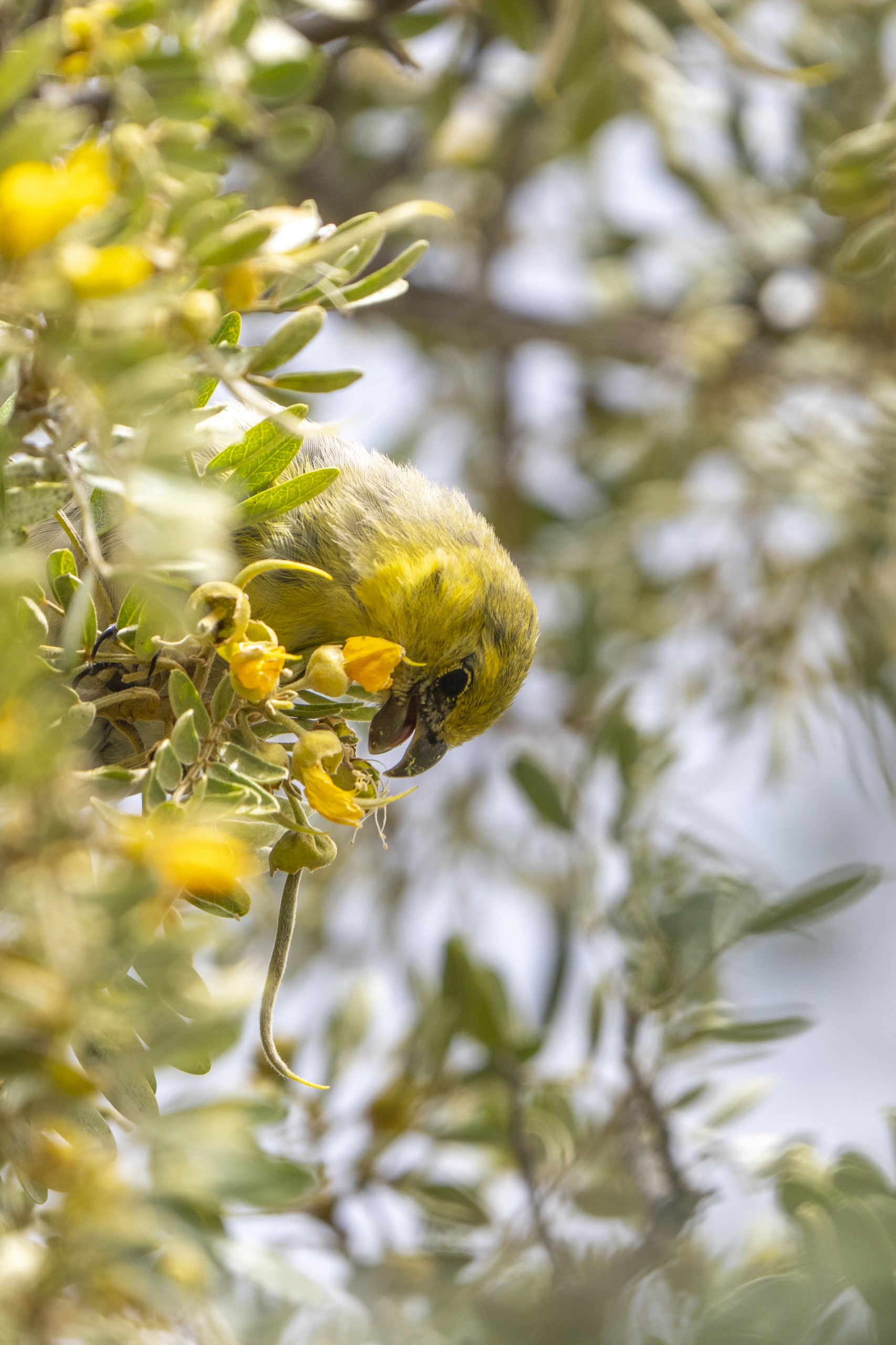
The Palila (Loxioides bailleui) is a critically endangered Hawaiian Honeycreeper with an estimated wild population of a few hundred individuals — the exact count shifts year to year and not in a good direction. Its entire existence is tied to a single tree: the māmane (Sophora chrysophylla), a native legume that grows in the dry highland forest. The Palila eats the seeds. Feral sheep and goats have eaten the forest itself, reducing it to a fraction of its historic range. The birds followed.
Finding Palila requires elevation and patience. The highland forest at the right time of year, when the māmane is flowering and the birds are moving between trees — that's where you look. When you finally see one working through the canopy, the yellow head catching the light through the leaves, it stops you.
Hawaii is the extinction capital of the world. Avian malaria carried by introduced mosquitoes, feral cats, habitat loss, and deforestation are driving endemic bird species toward the edge. The Palila were plaintiffs in a landmark 1980 lawsuit against the State of Hawaii under the Endangered Species Act — and won. That Act is now under threat at the federal level. Organizations doing the work: Birds Not Mosquitoes, Mauna Kea Forest Restoration Project, American Bird Conservancy.
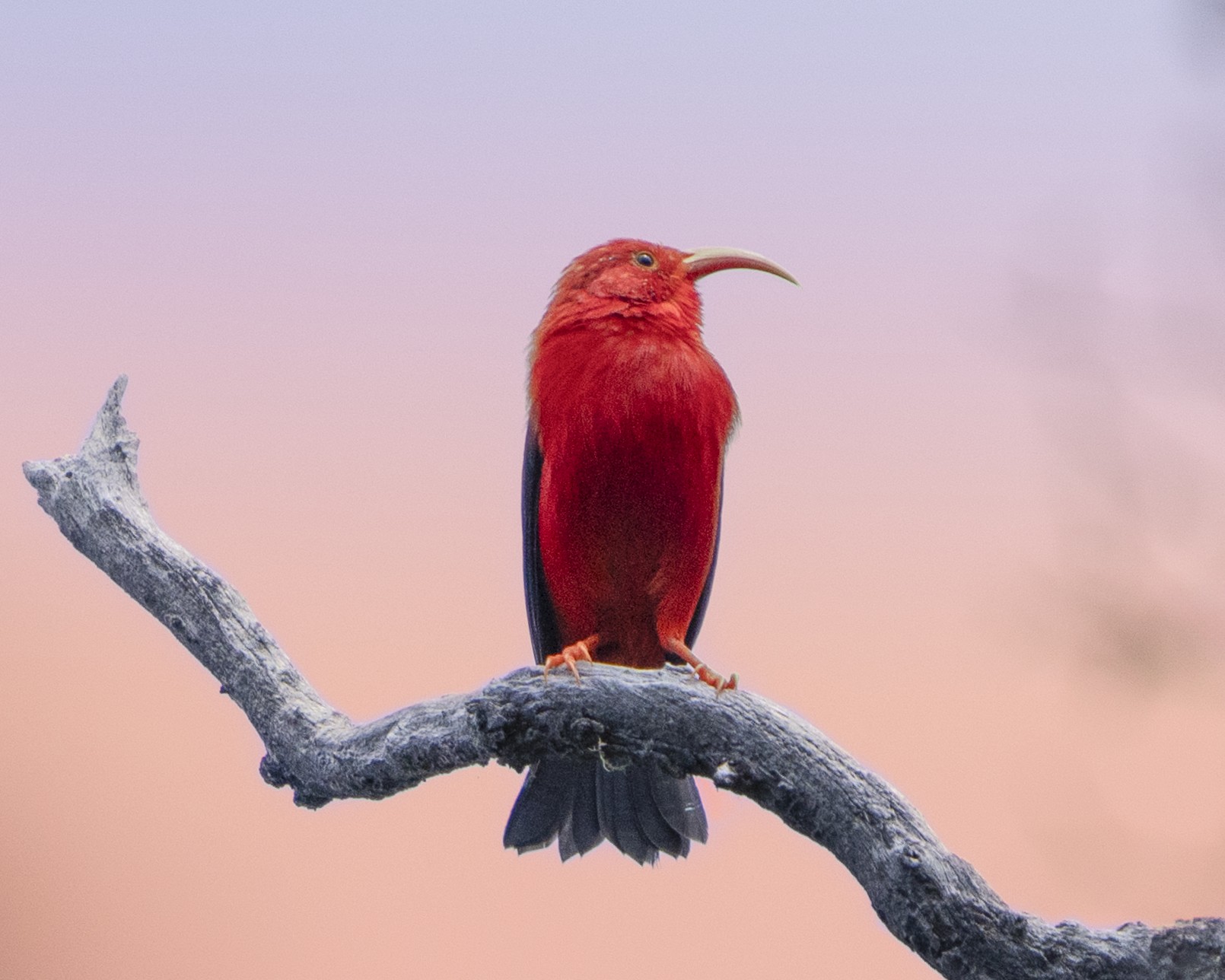
The ʻIʻiwi (Drepanis coccinea) is hard to miss — scarlet body, black wings, that long decurved bill evolved specifically for drinking nectar from native flowers. Watch one long enough and you see the relationship in real time: bill into flower, head lifts, pollen transfers. The plant needs the bird to reproduce. The bird needs the plant to survive. Pull either thread and the system unravels.
The same mosquito-borne disease that is hammering the Palila is hitting ʻIʻiwi even harder. They have essentially no immunity to avian malaria. As temperatures rise and mosquitoes push to higher elevations, the birds are running out of altitude to retreat to.
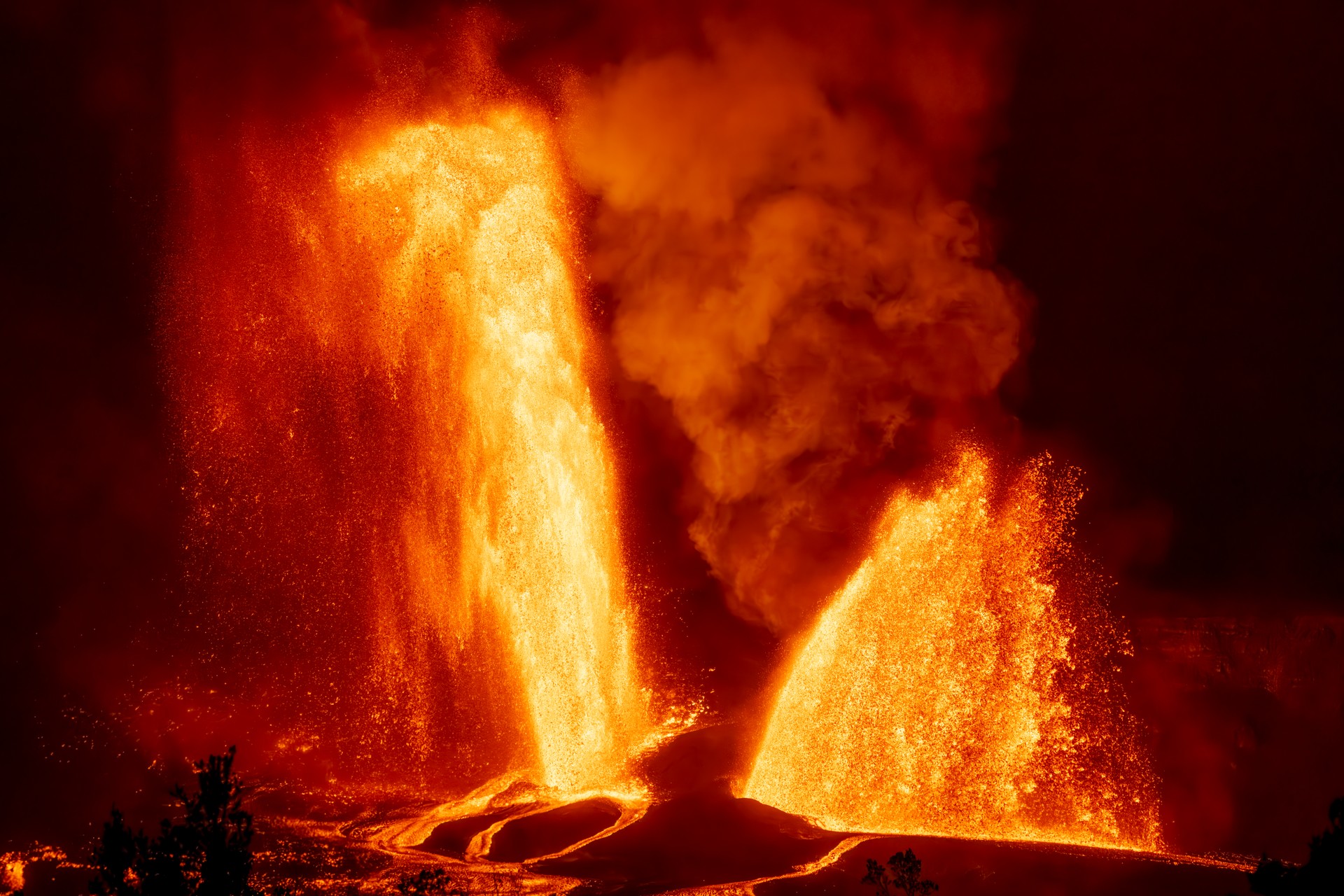
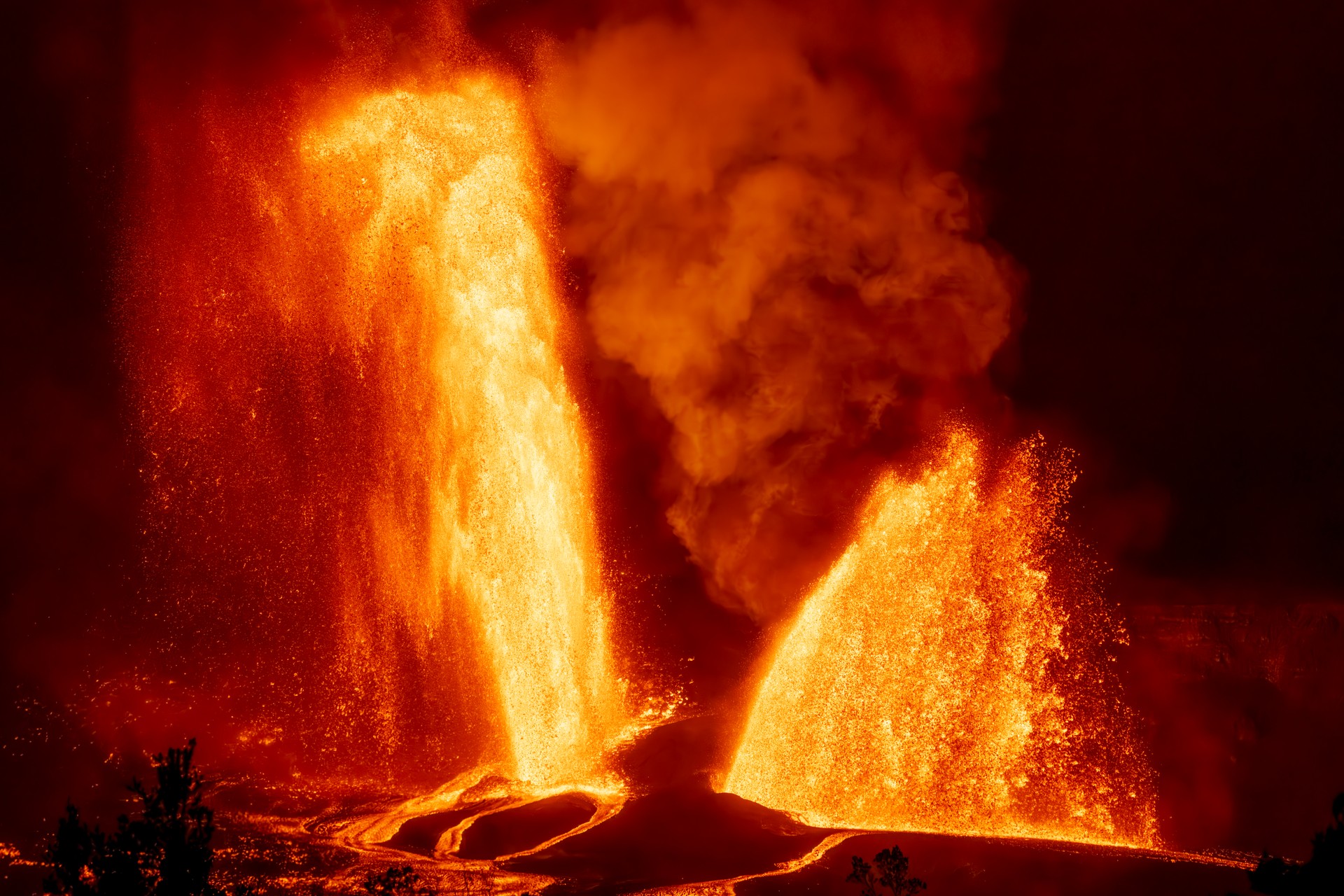
Kīlauea was active during both visits. Watching it at night from the overlook is one of those experiences that doesn't compress into words particularly well — the caldera glowing orange, plumes rising, the ground beneath you made of the same material that's still being added to the island in real time. The island is being built while you stand on it.
We skimmed the surface. The Big Island rewards return trips — different elevations, different seasons, different eruption episodes. There's an ocean here too, and tidepools, and reefs. Next time we go deeper.